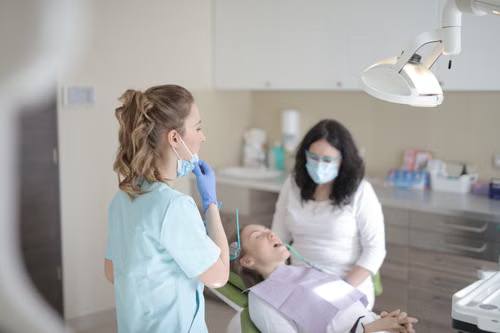
The bad news about gum disease immediately raises an embarrassing question. So do you treat it with scalpels and stitches and a week of living on soft food and painkillers? Enter the LANAP-certified dentist, who now offers a different path to treat moderate-to-advanced gum disease: a laser (instead of a blade). That difference manifests at nearly every step of the way, from the appointment process itself to how your gums heal afterward.
LANAP is Laser-Assisted New Attachment Procedure. A LANAP-certified dentist has hands-on clinical experience before performing the procedure on even one patient since they followed a specific protocol with a specific instrument. This is not a weekend class or an e-mail-based certificate. It is a training that runs over many sessions with supervised live patient work.
Certification also indicates something about the practice itself. A practice that has a laser as part of their gum care program instead of as an add-on from expansive training, equipment & integration. At Samuel Dental Care in Sacramento, we practice laser dentistry, including the laser-assisted new attachment procedure (LANAP), and provide routine cleanings and checkups, so you can get from diagnosis to treatment without needing to be referred across town. Now, what actually happens differently? Take it stage by stage.
Gum Surgery vs LANAP Protocol
Standard gum surgery (osseous or flap surgery) involves actually cutting the gum back from the teeth, then folding it away and tucking it against the teeth to expose the impacted pockets, eliminating all contaminated tissue and sewing everything back into place. It seems to work and has been used by dentists for decades. It also removes healthy tissue in the process, which is why gums tend to sit lower on the teeth afterward. But many patients experience more elongated teeth and fresh sensitivity pretty high in the roots.
This route uses the same effort as the LANAP protocol. A fiber about the size of three strands of human hair goes down between the tooth and the gum. The wavelength of the laser energy is adjusted to interact with the dark pigment in the bacteria that are causing the infection. Diseased tissue absorbs the energy. Healthy tissue, which does not have that pigment, mostly does not. They do not need to cut the gum at all to clear the infection.
Wound Sealant for No Scalpel, No Sutures
This is one of the most significant ways patients see a change. And there is no cutting involved, and therefore, nothing to sew together. Once the pockets are cleaned and tartar-free root surfaces are uncovered using fine instruments, the dentist re-establishes the laser with a different setting. And then this passes, forming a big, thick, stable clot that seals the pocket shut, like a scab over the hole.
That seal does two jobs. It prevents bacteria from entering the pocket until a new attachment can develop and keeps the healing gum close to the tooth. In contrast, consider a sutured incision that remains open to the air for days and requires diligent home care to avoid breakdown or infection.
Regeneration Instead of Resection
Take note of the term “regrowth,” as it is a quantifiable difference that sets LANAP apart from older techniques. Traditional surgery is resective. In fact, it recedes and removes tissue to make the pockets shallower. The FDA approves LANAP for true regeneration: new bone and new connective tissue forming along the root of a previously diseased tooth.
The regeneration of all teeth is not something anyone can offer you. Biology is not the same for all patients, as a properly trained dentist will tell you straight up. But that prospect, of renewing support in and around a loose tooth instead of just preventing any further destruction, shifts the dialogue for those told previously that certain teeth could not be salvaged.
The Recovery Process Follow-Up Care After LANAP Treatment
In all honesty, recovery is typically the first thing patients inquire about, and it is indeed where the day-to-day difference is most felt. The majority of people go back to work the next day. Some return the same afternoon. The discomfort was more akin to a dull ache than to surgical pain, and many patients cope on little or no meds.
In this case, a soft diet can be followed for a few days to protect the healing clot. When brushing near treated areas, you will have to wait for the dentist’s signal. Follow-up visits assess the degree of pocket closure. Now, LANAP does not claim to be a zero-downtime procedure. The point is that you are healing with the gum tissue intact rather than reattaching from an incision.
Questions You Should Ask Before Booking
Here is a brief checklist to help you differentiate a certified provider from an office that only owns the laser:
- What laser is used for gum treatment, and does it belong to LANAP & Pinhole?
- Where did the dentist take LANAP training?
- What is the previous workload of the office in respect of LANAP cases?
- Which outcomes are realistic for your pocket readings and bone levels?
A competent provider will be glad to address any of these queries. If you get vague answers, or tangentially reference a different procedure than what you’re asking about, that’s telling in itself as well.
Who Benefits a LANAP Certified Dentist the Most
The best candidates are adults with mild to moderate Periodontitis or deep pockets that cleanings can no longer control, and bone loss around one or more teeth. Those who delayed conventional surgery due to fear quite often do well here, because the barrier that held them back has disappeared. Many patients on blood thinners also qualify, since the procedure sidesteps the bleeding that can result from incisions; ultimately, it is up to the dentist performing the exam.
Wrapping Up
Gum disease never waits for you to make up your mind. Pockets deepen gradually, bone recedes insidiously, and none of it hurts until the late stages. That silence is precisely what makes having an exam something to book now rather than after the tooth shifts. LANAP-certified dentists can take precise measurements and let you know whether laser treatment, deep cleaning, or just monitoring is right for your situation. The earlier that conversation takes place, the more options remain on the table.
