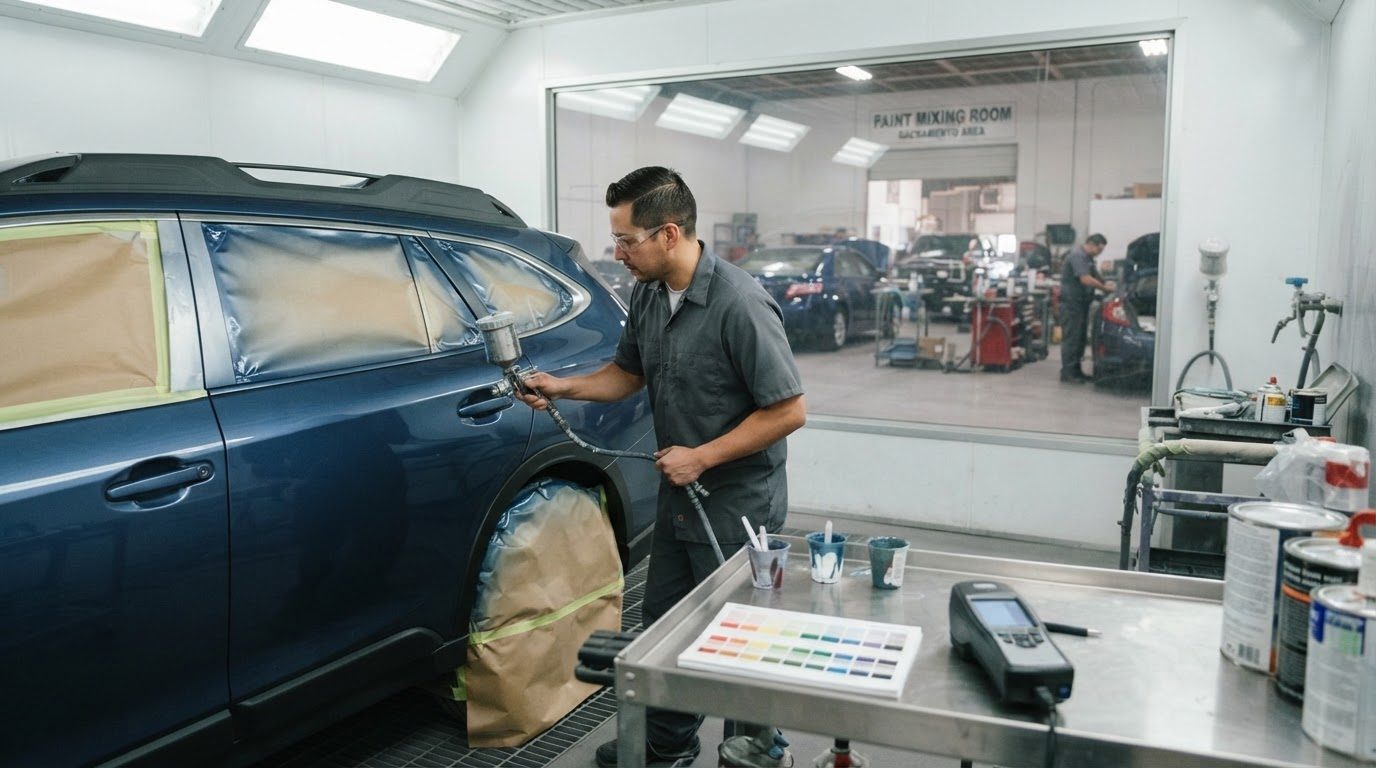
A scratched bumper, peeling clear coat, or sun-faded door can make an otherwise well-maintained vehicle look neglected. In Sacramento, intense summer sun and extended heat can accelerate oxidation, fading, and clear-coat failure, making prompt refinishing more than a cosmetic decision.
Finding an auto paint shop near me is only the first step. The more important questions concern color-matching methods, surface preparation, paint-system quality, technician certifications, warranty terms, and whether the facility can address underlying body or collision damage.
A proper refinish should restore appearance while protecting the substrate beneath the paint. That requires determining whether damage is limited to the clear coat, extends through the color layer, or has exposed steel, aluminum, plastic, or composite material.
Paint and Surface Damage We Can Restore
Automotive refinishing can address a broad range of conditions:
- Faded or chalky paint caused by ultraviolet exposure and oxidation.
- Peeling, cloudy, or failed clear coat.
- Stone chips and small paint defects.
- Key scratches and deep gouges.
- Parking-lot scuffs, transfer marks, and shopping-cart damage.
- Scraped or cracked bumpers.
- Collision-related dents and damaged panels requiring body repair before painting.
The repair scope depends on the depth and spread of the damage. A light scratch that remains within the clear coat may respond to machine polishing or wet sanding. If the scratch reaches the base coat, primer, or metal, refinishing is generally required.
A localized repair can make sense for a small, isolated defect with stable surrounding paint. However, a full-panel refinish is often more reliable when damage reaches an edge, covers a broad area, involves clear-coat failure, or sits beside visibly faded paint. A bumper, hood, door, or quarter panel may require complete preparation and clear coating to prevent an obvious transition.
When bare steel is exposed, moisture and road contaminants can begin corrosion beneath the finish. Aluminum can oxidize, while plastic parts may require specialized adhesion promoters. Delaying repairs may therefore increase the required preparation and cost.
Color Matching That Blends With the Original Finish
A factory paint code provides the starting point for color formulation. Technicians use that code with BASF color data, variant information, and visual evaluation to select the closest formula for the vehicle’s actual finish. Paint can vary because of production batches, UV exposure, repairs, and aging.
Metallic and pearl finishes are particularly demanding. Metallic particles must orient consistently during application, while pearl systems can shift in appearance depending on lighting and viewing angle. Spray-gun setup, fluid control, flash time, temperature, and application technique all affect the result.
For that reason, technicians may blend the color into an adjacent panel rather than stopping sharply at the repaired panel’s edge. Controlled blending reduces the risk of a visible “patched” area, especially when the original finish has weathered.
Clear coat is applied over the color layer to restore gloss, depth, and resistance to ultraviolet exposure, chemicals, and everyday abrasion. The final result depends heavily on panel cleanliness, booth conditions, flash times, and curing—not simply the paint brand.
What the Auto Paint Repair Process Involves
Damage Assessment and Repair Planning
The process begins with a visual inspection and, for collision-related work, a broader diagnostic assessment. A technician may look for hidden structural, electrical, mechanical, sensor, and restraint-system damage behind the visible paint defect.
A documented repair blueprint typically includes:
- Panel damage and repair-versus-replace decisions.
- Disassembly requirements and access to hidden areas.
- Computerized structural measurements where applicable.
- Paint preparation, blending, and clear-coat requirements.
- Parts, materials, scans, calibrations, and estimated labor.
For collision claims, the shop may coordinate with the insurer, submit supplements after disassembly, order approved parts, and arrange rental transportation. The initial estimate is not always final because hidden damage can only be confirmed after damaged trim and panels are removed.
Refinishing, Reassembly, and Quality Control
Refinishing commonly includes cleaning, sanding, dent repair, corrosion treatment when needed, primer or sealer application, color application, blending, clear coating, curing, and final polishing. Dust-control systems, including Mirka dust-free sanding equipment, help reduce airborne contaminants during preparation.
Manufacturer-approved BASF automotive paints can support consistent color and finish performance when applied according to the paint system’s technical specifications. Credentials such as I-CAR, BASF, and ASE certifications indicate formal training in collision repair, refinishing, diagnostics, or related technical disciplines. Shops should also follow applicable EPA air-quality requirements and OSHA workplace-safety practices.
After curing, the vehicle is reassembled and inspected. Collision-related work may require diagnostic scanning and ADAS calibration, particularly if a bumper, windshield, grille, camera, radar sensor, or suspension component was involved. A serious quality-control process checks panel gaps, alignment, paint texture, color consistency, gloss, overspray, warning lights, and repaired systems.
The final handoff should include cleaning, a walkthrough of completed work, care instructions, warranty documentation, and confirmation of any remaining insurance or payment details.
Choosing an Auto Paint Shop Near You
Compare facilities using evidence rather than appearance or a low advertised price. Ask whether the shop provides:
- Factory paint-code research and computerized or documented color matching.
- A controlled spray environment and professional refinishing equipment.
- Technicians with I-CAR, BASF, ASE, or comparable training.
- Written workmanship and paint warranties.
- Documented inspections, diagnostic scans, and calibration procedures.
- Clear estimates that separate body repair, parts, paint, materials, and labor.
Confirm that the facility handles the specific service required, whether that means a single-panel repair, bumper painting, complete repaint, color change, or clear-coat restoration. A full-service collision center is often preferable when paint damage is connected to dents, structural distortion, airbags, wiring, parking sensors, cameras, or radar systems.
Before authorizing work, ask:
- Can I receive a written estimate after inspection?
- What is the expected completion range, and what could change it?
- Will the shop coordinate directly with my insurer?
- Are parts availability or supplements likely to affect timing?
- Are rental-car arrangements available?
- How will repair updates be provided?
- What exactly does the warranty cover, and for how long?
Auto Paint Repair Questions Sacramento Drivers Ask
How much does an auto paint repair cost?
Pricing varies by damage depth, panel size, paint type, preparation, blending, and bodywork. As a broad U.S. planning range, minor touch-up or spot repairs may cost about $150–$500; a single-panel refinish often falls near $500–$1,200; bumper repairs commonly range from $400–$1,000; and multi-panel or full-vehicle repainting can run from roughly $2,000 to more than $8,000. Premium finishes, extensive corrosion, structural repairs, and color changes can increase the total.
A physical inspection and written estimate are more reliable than a generic online price.
Can a scratched or faded panel be matched to my car?
Usually, yes. The factory paint code, BASF color data, variant selection, spray-out testing, and blending techniques help match metallic, pearl, solid, and other finishes. Aged or heavily faded surrounding paint may require blending into adjacent panels for the most consistent appearance.
How long does paint and scratch repair take?
A shallow cosmetic repair may take several hours, while panel refinishing commonly requires one or more days for preparation, paint application, curing, and inspection. Collision repairs can take longer because of disassembly, supplements, parts ordering, structural work, diagnostics, and calibration.
Do you offer full repaints and color changes?
These are separate scopes from single-panel refinishing. A complete repaint or color change requires extensive disassembly, jamb and edge preparation, masking, material selection, and reassembly. It should be evaluated as a restoration project rather than a simple touch-up.
How should fresh automotive paint be maintained?
Follow the shop’s curing instructions precisely. Use gentle hand washing or an approved touchless wash, avoid harsh chemicals and abrasive brushes, and postpone waxing, polishing, or ceramic products until the finish has fully cured. Sacramento’s strong sun also makes shade, paint-safe washing, and periodic inspection worthwhile.
Can insurance or deductible assistance apply?
Collision-related paint repairs may be covered under a qualifying policy, subject to the deductible, exclusions, and claim circumstances. Ask the facility to explain insurer coordination and obtain written details about any deductible assistance before authorizing repairs. Never assume coverage or out-of-pocket terms without reviewing the estimate and policy.
