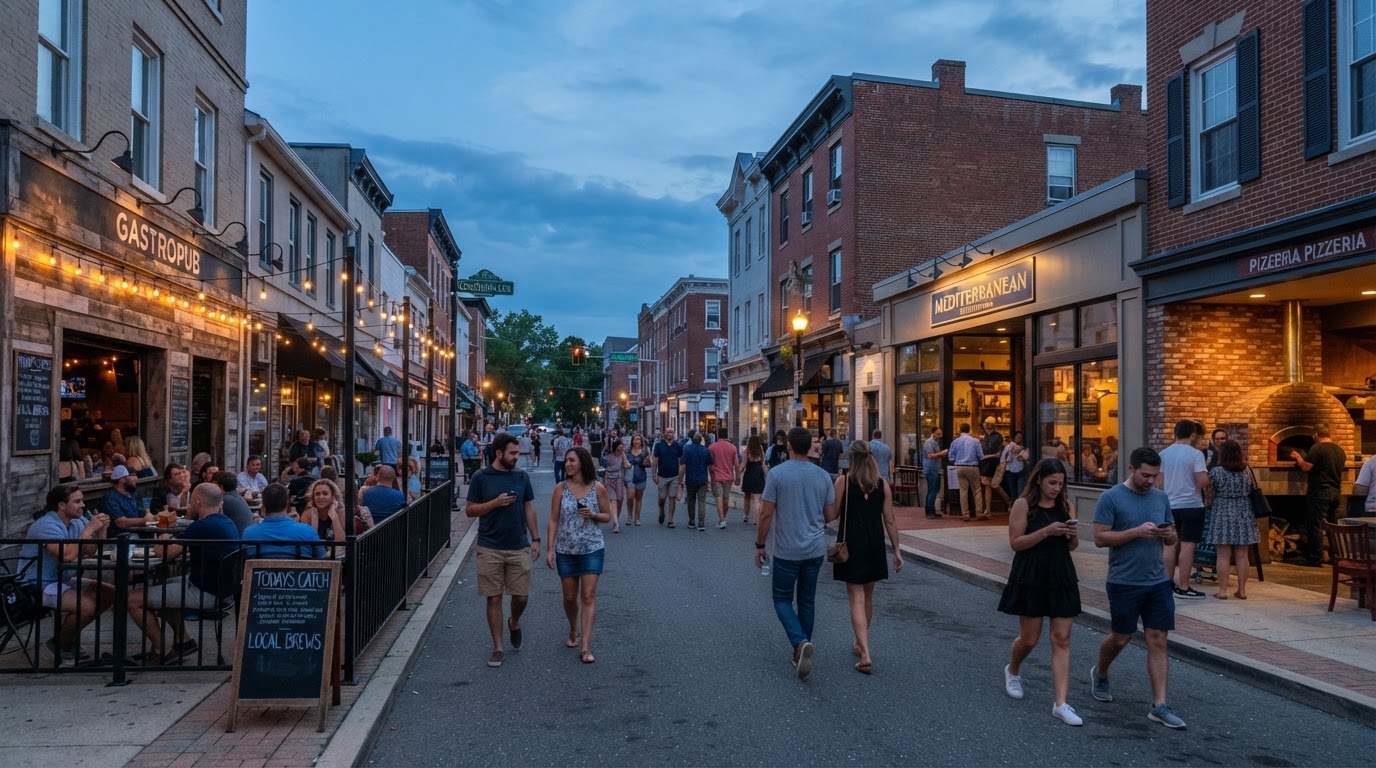
Deciding where to eat can take longer than the meal itself. A first date, a client lunch, and a casual get-together with friends call for different rooms, noise levels, and expectations about how long you’ll stay. Conshohocken, a borough in Montgomery County, Pennsylvania, has a range of dining options that serve all of these needs, and the right choice usually depends more on the occasion than on the cuisine.
When people search for places to eat conshohocken, they are usually asking a practical question: which restaurant fits this specific evening? A map pin shows where a restaurant is, but it rarely shows whether the room will suit a conversation, whether a table needs to be booked, or whether the menu works for a group with mixed tastes. Reading listings with those questions in mind makes the search far more efficient.
Once you have a shortlist, the next step is confirming the details that matter for your plans. A location page such as the one for The Tomato Shack salad & pizza co, Conshohocken is a useful starting point, but hours, menus, and ordering options can change, so verify them before you commit.
Choosing a Spot by Occasion
Start with the reason for going out, since it narrows the field quickly. Each occasion puts different demands on a restaurant:
- Date night: Look for a quieter room, a menu that works for conversation, and a reservation system so you aren’t waiting at the door.
- Group dinner: Prioritize seating that can be arranged for several people, a menu with options for different preferences, and a policy for large parties.
- Business meal: Choose a spot where you can hear each other, where service is unhurried, and where a reservation guarantees a table at a fixed time.
- Quick lunch: Consider takeout or pickup, a short menu you can scan quickly, and a counter or walk-in setup that doesn’t require planning ahead.
- Casual meetup: A relaxed bar or patio area works well when the goal is catching up rather than a formal meal.
Beyond the occasion, a few practical criteria help you compare specific restaurants:
- Seating capacity: Whether the room can accommodate your party without splitting it up.
- Noise level: Whether the space is suited to conversation or is more lively and social.
- Reservation needs: Whether the restaurant takes bookings through its own website or requires a call.
- Suitability for children: Whether the atmosphere and menu are family-friendly.
- Large-party policy: Whether the restaurant handles groups of eight or more, and whether it requires a deposit or a set menu.
Answering these questions before you leave the house saves more time than comparing reviews after the fact.
Cuisine, Atmosphere, and Price Range Across Town
Conshohocken’s restaurants vary in both food style and setting. The borough’s own dining directory describes a community with many establishments offering a variety of cuisines and services, which means you can usually find more than one kind of meal within a short walk or drive. Rather than ranking venues, it helps to sort them by the kind of experience they offer.
Casual Neighborhood Spots
Casual neighborhood restaurants are often the easiest choice for regulars and first-time visitors alike. The appeal is comfort, value, and a relaxed pace. These rooms tend to have straightforward menus, unhurried service, and a setting where you can linger without feeling rushed. When comparing them, focus on what you’ll actually order: a menu that covers several dishes you like is often a better signal than a long list of specialties.
Pricing is one of the most common questions readers ask, but the supplied research does not include local price data, so the only reliable method is to read current menus on each restaurant’s website or in person. Compare entrée prices, not just appetizers, and check whether lunch menus differ from dinner menus.
Bar-Forward and Social Venues
Some restaurants are shaped as much by their drinks, lounge seating, or outdoor areas as by their kitchens. These venues can be excellent for a long evening with friends, but they behave differently from a full-service dining room.
To tell the difference, look for these signals:
- The homepage or menu leads with a bar program, cocktails, or happy hour before it presents dinner options.
- The listing describes lounge seating, fire pits, patios, or other outdoor areas as central to the experience.
- Reservations are framed around drinks or gatherings rather than set dinner seatings.
A useful example is Jasper’s Backyard, whose website describes a cozy indoor space alongside a signature backyard, with drinks around the fire pits and a craft bar program. That description places it firmly in the social category. A full-service dining room, by contrast, typically emphasizes its table service, a printed dinner menu, and seating designed for a meal rather than a drink-led visit. Neither model is better; the question is which one matches your plans.
What Conshohocken’s Food Scene Is Known For
Readers often ask what Conshohocken is famous for. The honest answer is that the borough is better understood by its dining character than by a single signature dish. The restaurants described across the borough’s directory and individual listings share a few recurring traits: a mix of cuisines, an emphasis on elevated casual food, a growing attention to craft drinks, and spaces designed for gathering.
These patterns are visible in public listings. The borough’s directory highlights restaurants that offer a range of cuisines and services, and individual operators such as Jasper’s Backyard describe their food as creative, elevated comfort fare paired with a craft bar. Readers can verify this themselves by browsing several listings and noticing how often menus, photos, and descriptions emphasize shared plates, drinks, and group settings.
Individual businesses tend to get the most coverage, so the wider picture is worth understanding. If you are new to the area, a useful approach is to compare three or four restaurants of different types before deciding which style suits your typical evenings.
Planning a Visit: Reservations, Takeout, and Daily Deals
Dining logistics are easier to manage when you handle them in a set order.
- Decide whether you need a reservation. If you’re celebrating, hosting a business meal, or bringing a large group, book ahead. Many restaurants offer online reservation systems, as Jasper’s Backyard does, which let you select a time without a phone call.
- Check whether the restaurant takes walk-ins. Look for this on the restaurant’s website or its reservation page. If the information isn’t posted, call during off-peak hours and ask directly.
- Consider online ordering for takeout. When the goal is a quick meal at home or at the office, online ordering for pickup or delivery is often enough. Check the ordering page for pickup times and whether delivery is handled in-house or through a third party.
- Look for specials and happy hour timing. Daily specials are usually posted on the homepage, social media, or the menu page. Happy hour details, including days and hours, are often listed separately, so confirm them rather than assuming they run every day.
- Time your visit. Weekend evenings typically draw the largest crowds, so a weekday early dinner is usually more relaxed. For a bar-forward venue, a weekday afternoon may offer more seating, while a Friday or Saturday night may bring more energy.
These steps are a neutral framework. Each restaurant’s own policies determine the final answer, so use the framework to ask the right questions rather than to assume a specific outcome.
Verifying Hours, Menus, and Listings Before You Go
Hours, menus, and seating policies change often, and no single source is complete. The borough’s dining directory notes that restaurants are listed based on submissions, and that a business must be located within the borough’s limits to be eligible. That means the directory is a helpful starting point, but it may not reflect the latest changes, and it does not include every establishment in the area.
Use a combination of sources to confirm details:
- Official borough listings: Confirm that the restaurant is included and that its basic information matches what you’ve found elsewhere.
- Restaurant websites: Check current hours, menus, reservation links, and any notices about holidays or private events.
- Recent reviews: Read reviews from the past few months to spot patterns about wait times, noise, or service changes.
- Phone or direct contact: For large parties or dietary needs, call the restaurant to confirm what it can accommodate.
Before booking or ordering, run through this checklist:
- Confirm today’s hours, including any holiday schedule.
- Verify that the menu you’re viewing is current, and check prices on the menu itself.
- Check the reservation policy, including minimum party size, cancellation rules, and any deposit requirements.
- Confirm whether walk-ins are accepted or whether the restaurant is booked for your time.
- Look for happy hour or special offers, and confirm the days and times they apply.
- Confirm pickup or delivery options and expected wait times for takeout orders.
- Note any dietary accommodations you need and ask about them directly.
A few minutes of verification prevents most of the common problems of a night out: a closed kitchen, an outdated menu, or a table that isn’t available when you arrive. Matching your meal to the right restaurant starts with understanding the occasion, but it succeeds when you confirm the details before you walk through the door.
