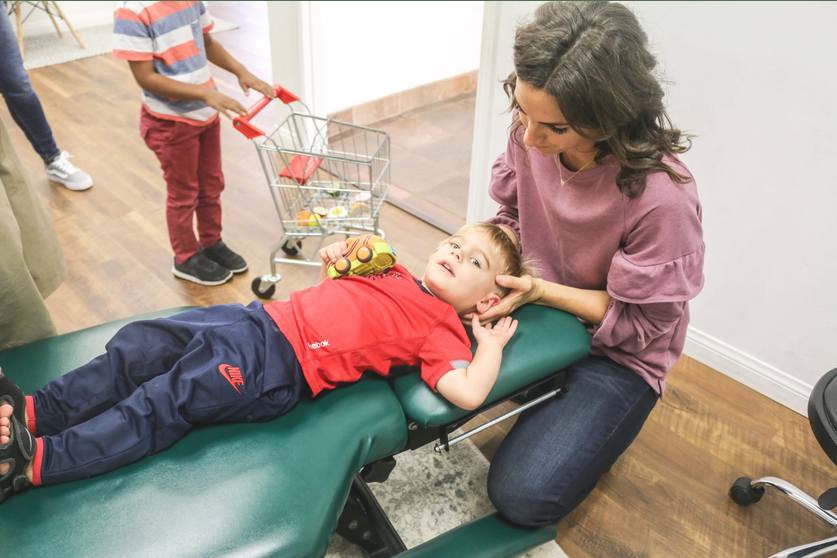
For other kids, there is only one velocity: fast. They climb all over the couch and bounce between rooms, treating every waiting area like an advertisement for an obstacle course. Parents see this and check chiropractic care off their list without a word because who would want to adjust a child that cannot sit still for ten seconds? This is a concern that the pediatric chiropractors hear nearly every week from parents, and the solution regularly stuns them. Lack of stillness is not an obstacle to care. In a way, it is what proves this kind of care even exists.
The image in most parents’ minds is based on what they saw when they took an adult, a large number of staff and a busy waiting room. The adult lies flat, keeps their mouth shut, and complies. Providers who see kids all day never expect them to do any of that. A pediatric chiropractic in Costa Mesa builds the whole visit around movement instead of fighting it. Short attention spans, sudden position changes, and mid-adjustment giggles are all part of a normal day, not an interruption to one.
That mindset is reflected in the office itself. Blooming Chiropractic is where you can bring the whole family, and children are encouraged to relax or play during their visit. Yet no one expects a toddler to act as a hospital-gown-wearing model patient. Play is honestly within the plan, because a comfortable child shows their provider so much more than a child pinned to a table could ever manage.
Why Your Little Client Who Can Never Sit Still Does So Well Living with Chiropractic
Wiggling is information. A child runs across a room, always favors one side while climbing, curls to get the toys, and mechanically twists it over his shoulder. These small patterns are highly indicative of joint range and muscle tension. And maybe the most strange part of all this worry is that stillness hides them. What often causes parents to squirm is the most beneficial part of the appointment.
Some parents wonder if all that energy signals better attention or self-control problems. Usually not. It is natural for fidgety behaviors to be present at an early age. A provider will examine if movement is symmetrical, and whether tension anywhere alters how a child plays. The spine conveys all physical development, and without it, kids have a tougher time moving through space.
Pediatric adjustments involve extremely light force, almost the level of pressure you would use to push down on a ripe tomato gently. The technique in no way relies on a long hold or a locked position. Casual, seconds-long contact, spaced out by wiggles. Parents who anticipate the cracking and twisting they are used to from adults usually come away relieved, perhaps slightly amused, by how quiet it all looks.
How a Visit to the Costa Mesa Chiropractor for Children Works
The first visit is more about talking and looking rather than touching. The provider asks about your child’s sleep, activity, and posture, and any pain they describe. Also, the child takes part in a brief assessment through play. It tells you things no intake form ever captures.
The practical stage takes place wherever the toddler is secure. It’s a table, a parent’s lap, the floor, or standing up mid-story about a lizard they saw at recess. Providers who work with children train to meet the moment, not impose a space.
Chiropractic Methods for Children that Never Stop Moving
Providers customize care for age, body size, and behavior. Different contact is given to a squirrely toddler than to a nine-year-old playing club soccer. It is calm because you are using fingertip-level pressure, holding for no more than a second, and staying in positions that feel natural to the child. No forcing, no carrying on if a child appears uncomfortable.
The objective remains low and achievable. The main modifications are to allow your growing body to figure it out while moving comfortably and with healthy joint mobility. It is everywhere, though no two children react the same way, that’s why care plans are built around the individual rather than a blank, common template. No body works that way, so if someone promises the same results per kid, beware.
Red Flags an Active Kid Could Use a Chiropractic Adjustment
Having high energy in and of itself is not a red flag. It is just childhood. Nevertheless, certain patterns require further investigation:
- Your child goes to one side while crawling, climbing, or wearing a backpack.
- Neck/back pain after sport/screen time
- A more awkward posture with no long-term habit
- Frequent trips and falls beyond typical clumsiness
These are not inherently bad. Just asking questions and a little reminder can provide the answers or, at the very least, calm your fears. Chiropractic care is also a complement to your pediatrician and not a substitute for medical advice, which, despite what any blog post tells you, ultimately means more.
Preparing a Wiggly Child for a Chiropractic Visit
Next steps are simple. Describe the visit as a place where a doctor watches how they move and helps their body feel good. Whether you bring a snack, a small toy, for you kid, the well-known matters more than directions, so familiar things calm nerves more quickly. If your child is young, plan around naps and choose a time when energy is at its usual level rather than an exhausted crash. The provider wants to see the genuine child, wiggles and all.
Children with that inability to sit still are not, by any means, poor candidates for chiropractic care. They can be the most ephemeral ones. The art of maneuvering within these measures tells their narrative: smooth techniques that apply in seconds, not minutes, and a family-centric office anticipating the sound. Your child may take the living room and treat it like a jungle gym; that energy will be welcomed, monitored, and utilized.
